


Rediscovering the Art of Fermentation
Fermenting food at home isn’t just a passing trend—it’s a timeless method of preservation that also happens to support a healthier gut. Whether you’re looking to introduce more beneficial bacteria into your daily routine or just enjoy bold, tangy flavors, learning to make kimchi, sauerkraut, and kombucha from scratch is a deeply satisfying (and surprisingly simple) experience. With just a few ingredients, clean tools, and a little patience, you can create probiotic-rich foods that nourish your microbiome and brighten your meals.
Ad Banner #1
— Placeholder for the first advertisement —
Why Ferment Foods at Home?
Fermentation is a natural process where microorganisms—mainly bacteria and yeasts—convert sugars into acids or gases. This not only preserves food but also enhances flavor, texture, and nutrient availability. Most importantly, many fermented foods contain live cultures that may help support digestion, reduce inflammation, and maintain microbial balance in the gut.
Unlike store-bought products, homemade ferments allow you to control the ingredients (no preservatives or added sugars), experiment with flavors, and enjoy a more active, potent batch of beneficial microbes.
Let’s walk through the basics of three classic ferments: kimchi, sauerkraut, and kombucha.
How to Make Kimchi at Home
Kimchi is a Korean staple made from fermented vegetables—most commonly Napa cabbage—seasoned with garlic, ginger, and chili.
Ingredients:
-
1 head of Napa cabbage
-
1/4 cup sea salt (non-iodized)
-
1 tablespoon grated ginger
-
1 tablespoon minced garlic
-
1–2 tablespoons Korean chili flakes (gochugaru)
-
1 teaspoon sugar or pear/apple puree
-
Optional: chopped carrots, green onions, daikon radish
Instructions:
-
Salt the Cabbage: Chop the cabbage into bite-sized pieces. Place it in a large bowl and sprinkle with salt. Massage the salt into the cabbage until it starts to soften and release water. Let sit for 1–2 hours, tossing occasionally.
-
Rinse and Drain: Rinse the cabbage thoroughly under cold water to remove excess salt. Drain well.
-
Make the Paste: Mix garlic, ginger, chili flakes, and sugar/puree in a small bowl to form a paste.
-
Mix Everything Together: Combine the cabbage with the paste and any optional veggies. Use gloves to massage everything together until well coated.
-
Pack into Jar: Press the mixture into a clean glass jar, packing it tightly to eliminate air pockets. Leave about an inch of space at the top.
-
Ferment: Cover loosely with a lid or fermentation weight and leave at room temperature for 2–5 days. Taste daily. Once it reaches your desired sourness, refrigerate to slow fermentation.
Simple Homemade Sauerkraut
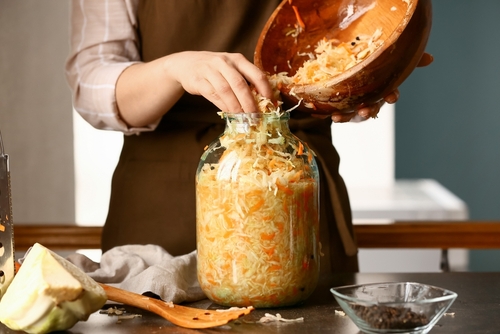
Sauerkraut is a European classic that uses only cabbage and salt, making it one of the easiest ferments to start with.
Ingredients:
-
1 medium head of green cabbage
-
1–1.5 tablespoons sea salt
-
Optional: caraway seeds, juniper berries, shredded carrots
Instructions:
-
Shred the Cabbage: Thinly slice the cabbage and place it in a large bowl.
-
Massage with Salt: Sprinkle with salt and massage firmly for 5–10 minutes, until the cabbage becomes limp and releases brine.
-
Pack into Jar: Transfer the cabbage to a clean jar, pressing it down so the brine rises above the cabbage. Leave about an inch of headspace.
-
Submerge and Seal: Use a weight or folded cabbage leaf to keep everything submerged. Loosely cover with a lid.
-
Ferment: Let sit at room temperature for 1–3 weeks. Taste periodically—longer ferments develop stronger tang. Once satisfied, refrigerate and enjoy.
Homemade Kombucha Basics
Kombucha is a sweetened tea that’s fermented with a SCOBY (Symbiotic Culture Of Bacteria and Yeast) to create a fizzy, slightly tangy drink.
Ingredients:
-
4–6 bags of black or green tea
-
1 cup cane sugar
-
1 SCOBY
-
8 cups filtered water
-
1–2 cups unflavored kombucha (from a previous batch or store-bought, unpasteurized)
Instructions:
-
Brew the Tea: Boil 4 cups of water, steep tea bags for 10 minutes, and stir in the sugar until dissolved. Add the remaining 4 cups of cold water to cool the tea to room temperature.
-
Transfer to a Glass Jar: Pour the cooled tea into a large glass jar. Add the starter kombucha and gently place the SCOBY on top.
-
Cover and Ferment: Cover with a breathable cloth or coffee filter secured with a rubber band. Place in a dark, warm area for 7–10 days.
-
Taste and Bottle: Taste after a week. If it’s tangy enough, remove the SCOBY and reserve some liquid for your next batch.
-
Optional Second Fermentation: Add fruit, herbs, or juice to bottles and let them sit for 2–3 days at room temp for natural carbonation. Then refrigerate.
Ad Banner #2
— Placeholder for the second advertisement —
Tips for Success & Safety
-
Clean Tools Matter: Always sterilize your jars, lids, and utensils before you begin.
-
Submersion is Key: Keep solids submerged in brine to prevent mold. If anything smells truly foul or develops fuzzy growth, discard the batch and start over.
-
Be Patient: Temperature, salt levels, and ingredient freshness all affect how long fermentation takes. Let taste be your guide.
-
Start Small: If you’re new to fermented foods, begin with small portions to let your body adjust to the influx of beneficial bacteria.
A Tangy Step Toward Better Gut Health
Fermenting your own foods is one of the most rewarding ways to support digestive health while connecting with traditional kitchen wisdom. Whether it’s the spicy kick of kimchi, the zesty crunch of sauerkraut, or the fizzy refreshment of kombucha, each project brings something special to your plate—and to your gut. With just a few supplies and a little time, you can cultivate flavors that are as nourishing as they are satisfying.