


There’s a particular kind of exhaustion that comes from living in a body that hurts in ways medicine can’t quite explain. It’s not always sharp or dramatic—it’s the low hum of chronic tension, the stiffness that moves from joint to joint, the feeling that something is “off,” even when the scans say everything looks fine. Many people arrive at this threshold—tired of being told their pain is normal, or worse, imaginary—looking for something that treats them as more than a symptom.
This is where the gentle precision of osteopathy and craniosacral therapy begins to speak. These are not quick-fix interventions or aggressive manipulations. They work by listening—hands on the body, following its internal language of tension, structure, and rhythm. In a healthcare landscape filled with noise, these therapies offer a quiet, powerful alternative.
A Holistic Philosophy: Healing Through Alignment
At the heart of osteopathy is a simple but radical idea: the body is a unified, self-healing system. When its structure is aligned and its parts communicate freely, health flows naturally. Restrictions—whether from injury, posture, stress, or trauma—disrupt that flow. Osteopathic treatment is designed to gently restore it.
This is not limited to the spine or joints. Osteopaths view fascia, muscles, bones, and organs as part of a connected web. One restriction in the pelvis can influence the jaw. A fall from childhood can echo in the posture decades later. Treatment often addresses the body globally, not just where the pain is most obvious.
Craniosacral therapy, a gentle offshoot of osteopathic principles, focuses more narrowly on the subtle rhythms of the central nervous system. Using feather-light pressure, practitioners tune into the craniosacral pulse—the ebb and flow of cerebrospinal fluid that moves between the cranium and sacrum. Where that rhythm is blocked, tension, trauma, or dysfunction may be held. Rather than force change, CST allows the body to unwind at its own pace.
What Makes These Therapies Different
In contrast to more forceful manual therapies, both osteopathy and craniosacral therapy emphasize relationship. The practitioner doesn’t impose—they respond. Hands are used not to push, but to feel, guide, and mirror. Treatments can be quiet, meditative even. For those living in pain, this approach often feels like permission to be treated gently, without needing to justify their symptoms.
And the effects, though subtle at first, can be wide-reaching. A release in the diaphragm may lead to better sleep. Realigning the hips may ease digestive discomfort. Craniosacral work on the base of the skull may soothe long-held tension behind the eyes.
None of this is about chasing symptoms. It’s about helping the body remember how to function without interference.
Pain Isn’t Always Where the Problem Lives
A common pattern emerges with chronic pain: the location of discomfort often isn’t the source. A stiff neck may trace back to limited mobility in the ribs. Pelvic misalignment might be the root of recurring headaches. Osteopaths are trained to follow these patterns, to feel for restrictions in motion and tension across the body’s architecture.
Craniosacral therapy takes this idea further—working with restrictions that live below conscious awareness. Emotional trauma, for instance, often stores itself in tissue. This isn’t metaphor—it’s somatic memory. CST provides space for that memory to surface and move, often releasing long-held protective patterns that traditional medicine can’t access.
Who Can Benefit from This Work?
These therapies are especially suited to people who feel that something in their body just isn’t syncing. They may help those with:
-
Chronic back, neck, or joint pain
-
Postural imbalances or recurring stiffness
-
Headaches and migraines
-
TMJ or jaw tension
-
Pelvic pain or menstrual discomfort
-
Stress-related conditions like anxiety or insomnia
-
Recovery after injury, surgery, or emotional trauma
Because they’re gentle and non-invasive, both osteopathy and craniosacral therapy are often well tolerated by sensitive individuals—those for whom strong massage or vigorous adjustments feel overwhelming. They can be used alone, or alongside other treatments in an integrative plan.
What a Session Feels Like
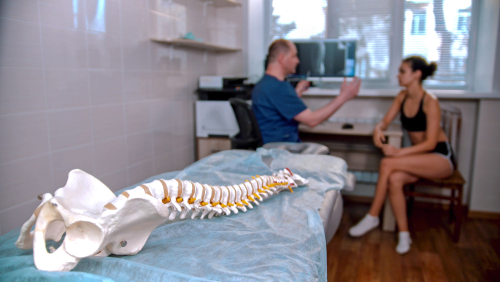
Expect quiet. Stillness. A sense of being listened to without urgency. The practitioner may start by observing posture, breath, or movement. Hands will move slowly over different parts of the body, sometimes resting in one place for several minutes. There’s no rush—only response to what’s found.
Afterward, some people feel immediate relief or lightness. Others notice deeper shifts unfold over days—a softening of symptoms, a deeper sleep, an emotional release. These therapies often work in layers, with each session peeling back a bit more of what the body is ready to let go.
Safe, Slow, and Intentional
Osteopathy and craniosacral therapy are generally safe for all ages, from infants to elders. But as always, working with trained, licensed practitioners is essential. These therapies require skill—not just technical, but perceptual. It takes presence to listen this closely.
They are not a replacement for emergency care or necessary intervention. But for chronic pain, postural issues, or stress-related dysfunction, they offer a different way forward—especially when conventional paths have run out of answers.
A Quiet Revolution in Pain Care
In a culture that often pushes harder, louder, faster, these therapies remind us that healing doesn’t always come through force. Sometimes, the most powerful shifts happen in stillness. In subtle recalibrations. In finally being touched in a way that says, “You don’t have to fight anymore.”
Osteopathy and craniosacral therapy are not about fixing the body—they’re about reintroducing it to itself. And in that reconnection, pain often finds its place—not as a threat, but as a guide toward balance.